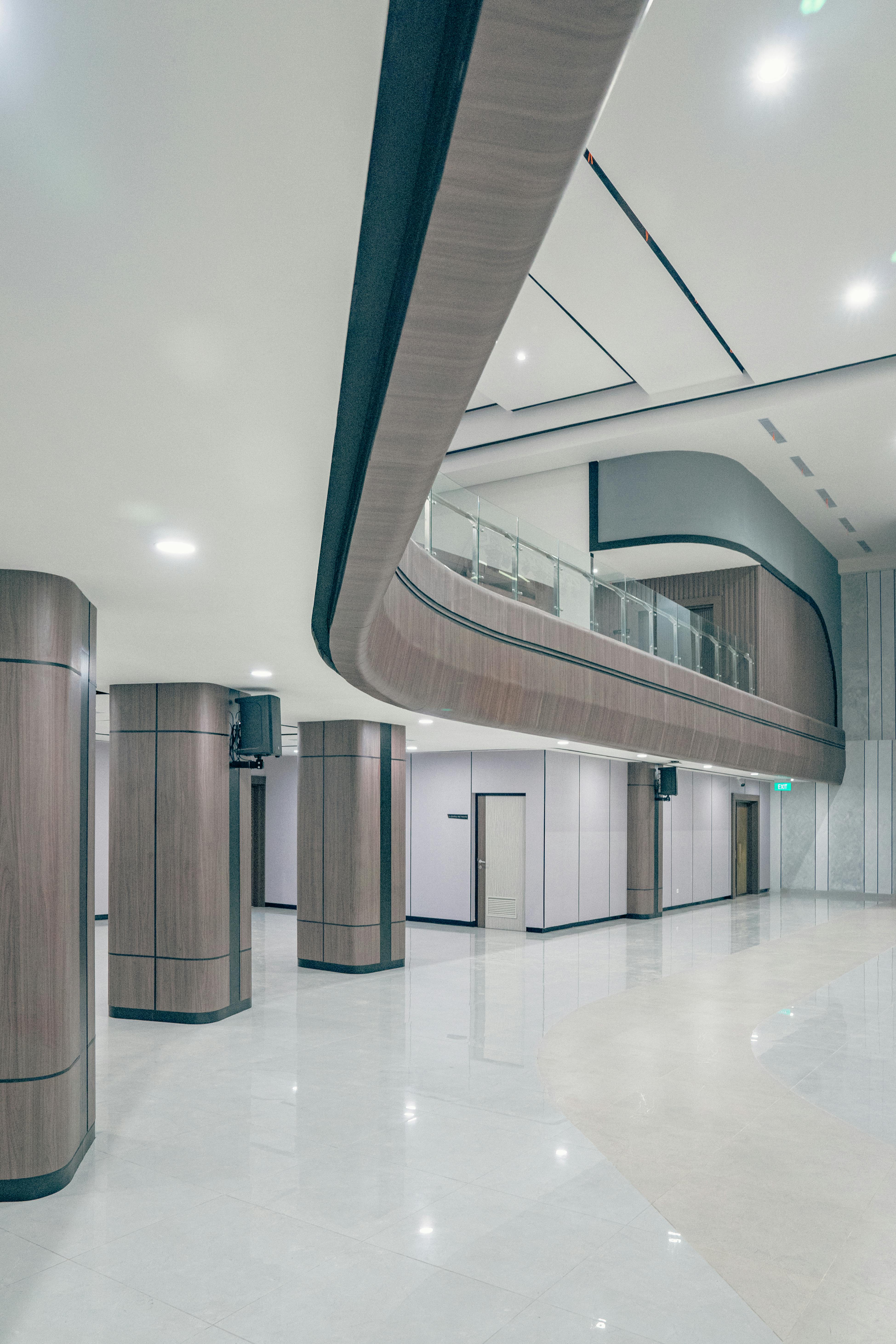
A person does not experience a hotel, a store, or a home all at once. They move through it. They transition from one zone to another. Each area carries a different function, a different pace, and a different emotional expectation.
Scent, when treated as a single uniform layer, ignores this reality.
Scent zoning addresses it.
Why One Scent for the Entire Space Is a Limitation
A single scent across an entire environment creates consistency, but it can also flatten experience.
Different areas within a space are not meant to feel identical. An entrance should not feel the same as a lounge. A dining space should not carry the same sensory tone as a restroom or corridor. Yet this is often what happens when scent is treated as a singular identity rather than a structured system.
This creates a disconnect between spatial intention and sensory experience.
Scent zoning introduces variation without losing coherence.
Understanding Zones Within a Space
Every environment is already divided into functional zones, whether consciously designed or not.
An entrance zone establishes arrival.
A transition zone guides movement.
A primary space holds attention.
A private zone reduces stimulation.
Each of these zones carries a different emotional requirement.
Scent becomes more effective when it aligns with these shifts rather than ignoring them.
The Role of Transition in Scent Design
The most overlooked aspect of scent zoning is not the scent itself, but the transition between scents.
A shift in scent should never feel abrupt. It should feel natural, almost imperceptible, as though the environment is evolving rather than changing.
This is achieved through controlled diffusion, overlapping scent profiles, and careful calibration of intensity.
A well-designed transition does not register as a change.
It registers as continuity.
Intensity as a Zoning Tool
Zoning is not only about changing the scent. It is also about adjusting intensity.
An entrance may require slightly higher projection to establish presence. A lounge or seating area benefits from a softer, more enveloping diffusion. Private spaces require restraint.
Intensity controls how consciously a scent is perceived.
When managed correctly, it allows the same composition to behave differently across zones without requiring entirely separate formulations.
Functional vs Emotional Zoning
Scent zoning operates on two levels: functional and emotional.
Functional zoning responds to how a space is used. High-traffic areas, service zones, and enclosed spaces all require different diffusion strategies.
Emotional zoning responds to how a space should feel. Energising, calming, grounding, or neutral states can be assigned to different zones depending on their role within the environment.
The most effective scent zoning strategies integrate both.
Maintaining a Cohesive Identity
The risk with zoning is fragmentation.
If each zone is treated independently, the space loses its identity. The experience becomes inconsistent rather than layered.
This is why scent zoning is not about using entirely different fragrances in each area. It is about working within a controlled olfactory palette.
Variations may exist, but they remain connected through shared notes, tonal consistency, or structural similarity.
The space feels diverse, but unified.
Applications Across Different Environments
In hospitality, scent zoning can differentiate between arrival areas, lounges, dining spaces, and private suites without breaking brand identity.
In retail, it can guide movement, subtly shifting atmosphere between entry, browsing, and checkout zones.
In residential environments, it can create distinction between social and private areas while maintaining a sense of continuity.
In each case, the objective remains the same: align scent with spatial function and emotional intent.
Why Scent Zoning Matters
Without zoning, scent becomes background.
With zoning, scent becomes structure.
It guides movement.
It supports transitions.
It enhances the intended experience of each space.
Most importantly, it makes environments feel considered at a level that is rarely articulated, but always felt.
Design does not happen in a single moment.
It unfolds over time.
Scent zoning recognises this.
It treats a space not as a static environment, but as a sequence of experiences.
By aligning scent with movement, function, and emotional shifts, environments become more than visually coherent. They become experientially precise. And that is what defines a space that is not only designed, but deeply understood.